BUILDING A BANKABLE CARIBBEAN SARGASSUM INDUSTRY
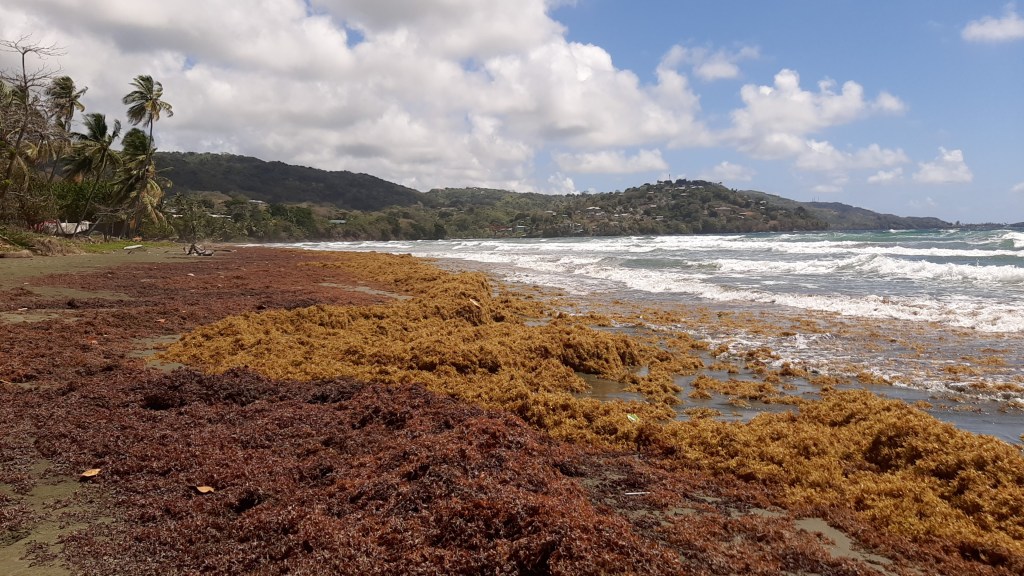
SSL is not a clean-up company. We work on the middle of the value chain: the steps between beach collection and an industrial customer. We are early-stage, and our current work is understanding our own feedstock before we commit capital to processing it.
From Waste Stream to Value Chain
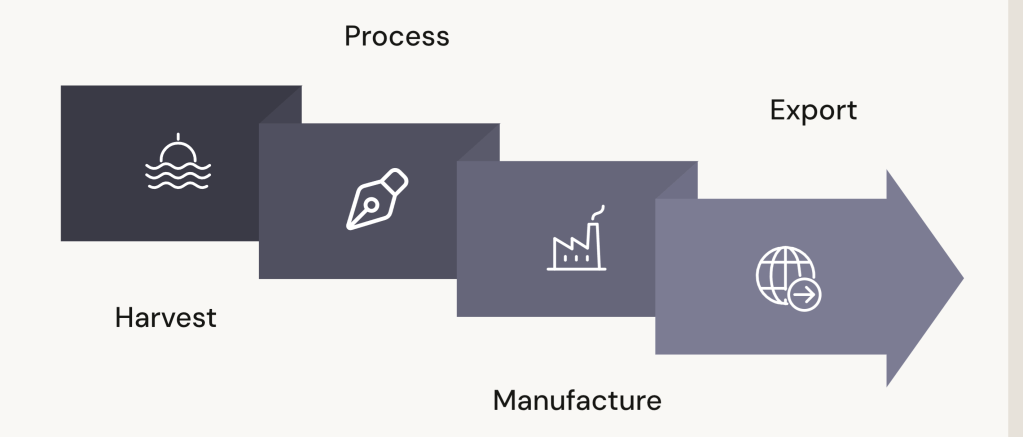
SSL’s integrated model is designed to capture value at every stage, from open ocean harvesting through to finished product export, ensuring margin retention and supply chain control. Every tonne of sargassum that reached a Caribbean shoreline represents a failure of infrastructure, logistics and market linkage. SSL’s work is aimed at closing that gap, turning sargassum into products such as biostimulants, biochar and extracts.
Pilot Project Vision: Trinidad & Tobago
SSL’s first integrated pilot project targets Trinidad and Tobago, a strategic choice given strong government support for the blue economy, access to national marine science institutions, consistent sargassum arrivals on both islands and SSL’s base in Tobago.
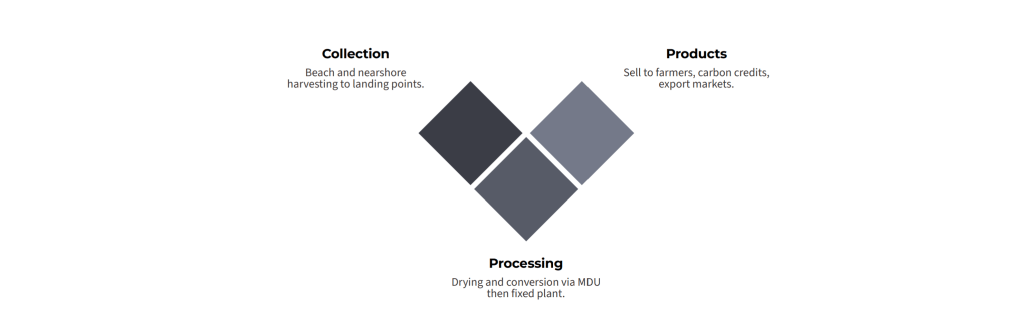
The pilot is structured as a phased proof-of-concept leading to a commercial-scale facility. We develop in stages: characterise the feedstock, bench testing, pilot, demonstration, industrial. Each stage ends at a gate with a stop point agreed in advance.
Tobago Site
Tobago’s north-eastern coastline receives some of the heaviest sargassum landings in the southern Caribbean. The island’s tourism-dependent economy creates strong political and private sector motivation for solutions. SSL is assessing landing and processing sites with road access and proximity to port infrastructure. Tobago also benefits from a supportive regional government with a stated commitment to environmental economic development.
Trinidad Site
Trinidad’s industrial infrastructure, port capacity and proximity to agricultural markets in both the Caribbean and South America make it the preferred location for scaling processing capacity. Trinidad and Tobago’s national marine science institutions provide a base for scientific support, environmental monitoring and regulatory liaison. Trinidad’s larger land area also supports future field trials.

